
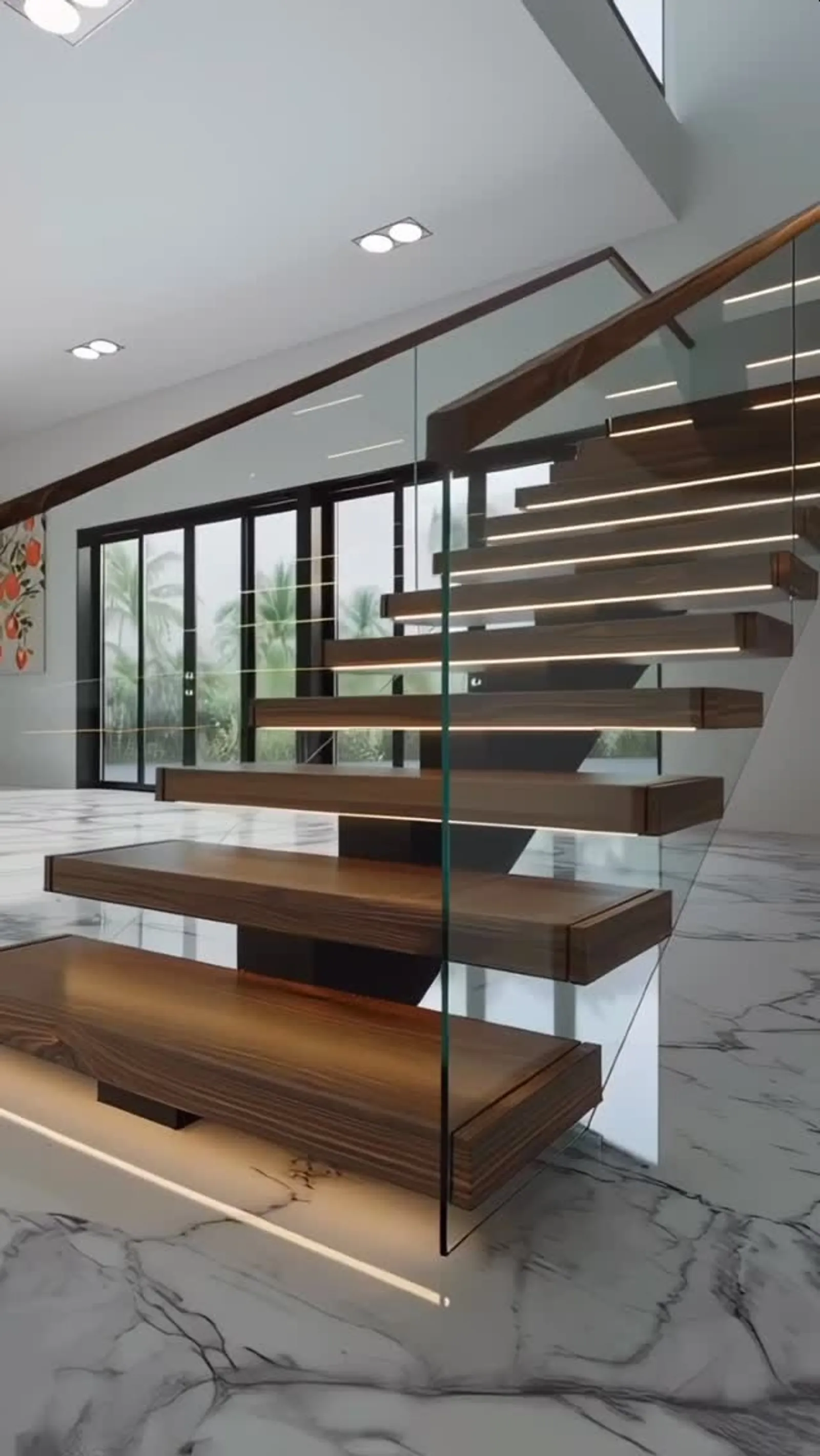
Wood Tread Options for Your Floating Staircase in Houston, TX
The structure is laser-cut steel. The difference you feel and see is the wood you choose — species, grain, hardness, and finish all determined by your home and how you use it.
At Houston Floating Stairs , every floating stair we build uses a laser-cut steel structure — fabricated in our shop, delivered finished, and installed without on-site welding or grinding. The wood tread is what goes on top of that structure. This page is about that choice: which species, what grain, how thick, and how it holds up in Houston's climate over time.
Wood tread selection starts with a humidity conversation, because wood that ships dry to a Houston home and gets installed the same week is going to move. Houston's humidity swings between outdoor summer air pushing 90% RH and indoor air-conditioned spaces running at 45–55%. That delta causes real expansion and contraction in solid wood, and it shows up as gaps, squeaks, or finish failure if the material wasn't acclimated first. We stage lumber on-site for a minimum of 10 days before any cutting happens. By the time we mill the final dimensions, the wood has already done its movement for your environment.
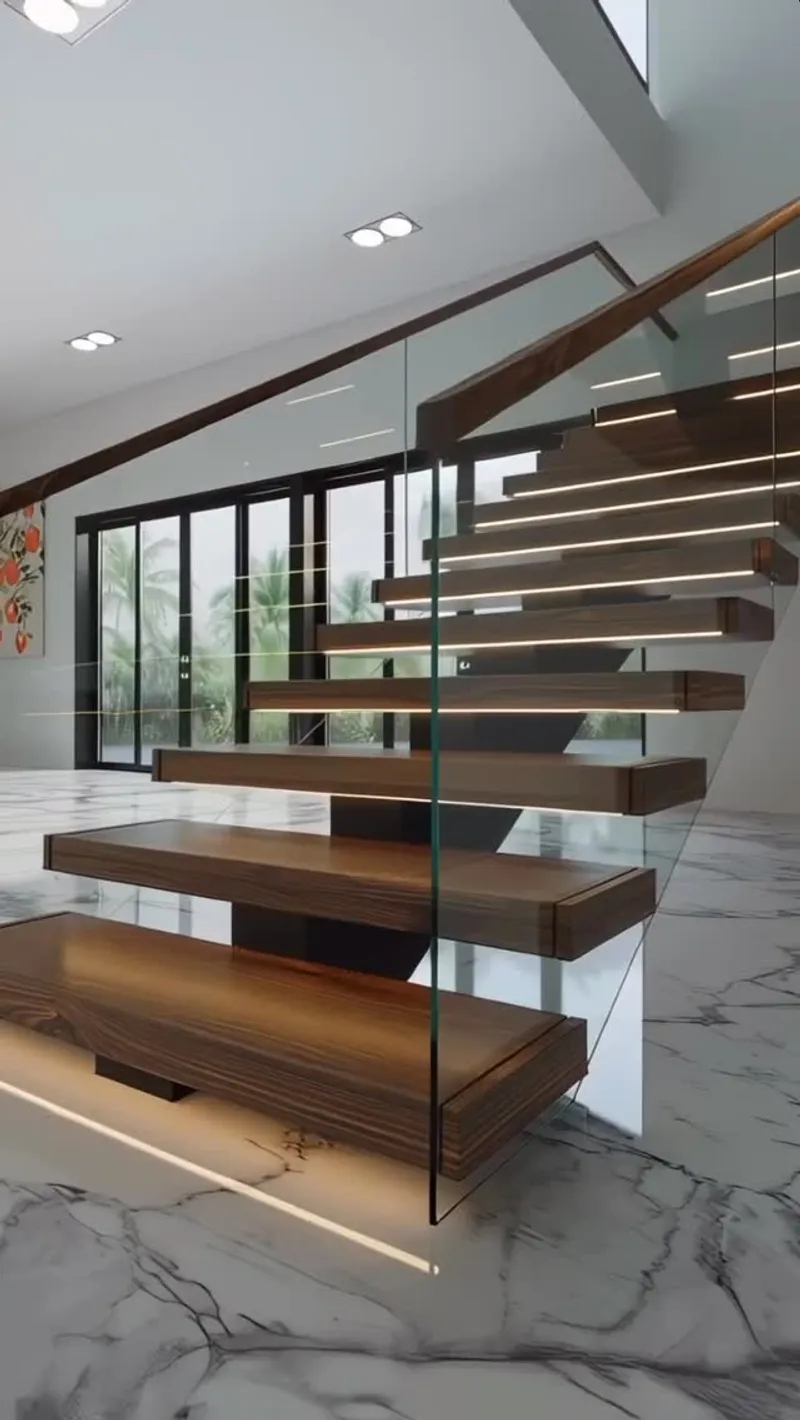
Species comparison — what actually matters in Houston: Walnut is stable and dense, a reliable performer across Houston's humidity range. It takes a natural oil finish well and holds its dark tone without staining. White oak is harder and has a tighter grain that responds more slowly to humidity swings — good for clients who want a specific stained tone and consistent color hold. Ash gives you a lighter, open grain with strong hardness ratings and a clean modern look. Hickory is the hardest of the four and the most impact-resistant — right for households with pets, young children, or heavy daily traffic. We carry all four and bring actual samples to the site visit, not catalog swatches.
The finish we apply is rated for humidity resistance and UV stability. Houston's south-facing windows put serious sun load on any interior surface. Standard polyurethane yellows and peels under that exposure over 3–4 years. We use a two-component water-based finish with UV absorbers built into the formula — it holds its tone and doesn't require refinishing on the same short cycle as standard floor finishes.
Tread thickness on a floating stair system matters structurally. We don't use 3/4-inch planks. Most of our hardwood treads run 2 to 2.5 inches thick — thick enough to span the cantilever without deflection underfoot and to allow for future refinishing without compromising structural depth. Every tread is fastened and glued, not just screwed down.
Ready to get started?
We'll assess the installation site, recommend species based on your indoor conditions, and give you an itemized proposal.
- ✓ Licensed & Insured
- ✓ Harris County Permit-Ready Documentation
- ✓ On-Time Completion Guarantee
- ✓ Deposit-Based Site Consultation
Wood Tread Selection — FAQ
Choose Your Wood — We Handle the Steel and the Install
Site assessment. Species samples at the visit. Itemized proposal within 72 hours.